FEODE FECCS — the only domestically developed valve-type continuous circulation drilling system in China. By maintaining uninterrupted mud circulation during connection make-up, FECCS eliminates pressure spikes and ECD fluctuations across critical formations. Verified at EP21-4-A1H — China's deepest offshore well at 9,508 m, a dual national record for depth and horizontal reach — in 2024. 远东 FECCS 是国内唯一自主研发的阀式连续循环钻井系统。通过接立柱过程中持续保持钻井液循环,FECCS 消除关键地层的压力波动与 ECD 跳变。2024年于中国海上第一深井 EP21-4-A1H(井深 9,508 米、井深与水平位移双项全国纪录)完成验证。
Continuous cuttings transport — a cleaner hole连续返屑带砂,井眼更清洁
Eliminates pressure surges — stable wellbore pressure有效消除压力激动,井眼系统压力稳定
Higher drilling efficiency, lower well cost提高钻井时效,降低钻井成本
Steady borehole conditions — better wellbore quality保障井筒压力平稳,井身质量更优
Only Domestic Valve-Type CCS国内唯一阀式连续循环系统
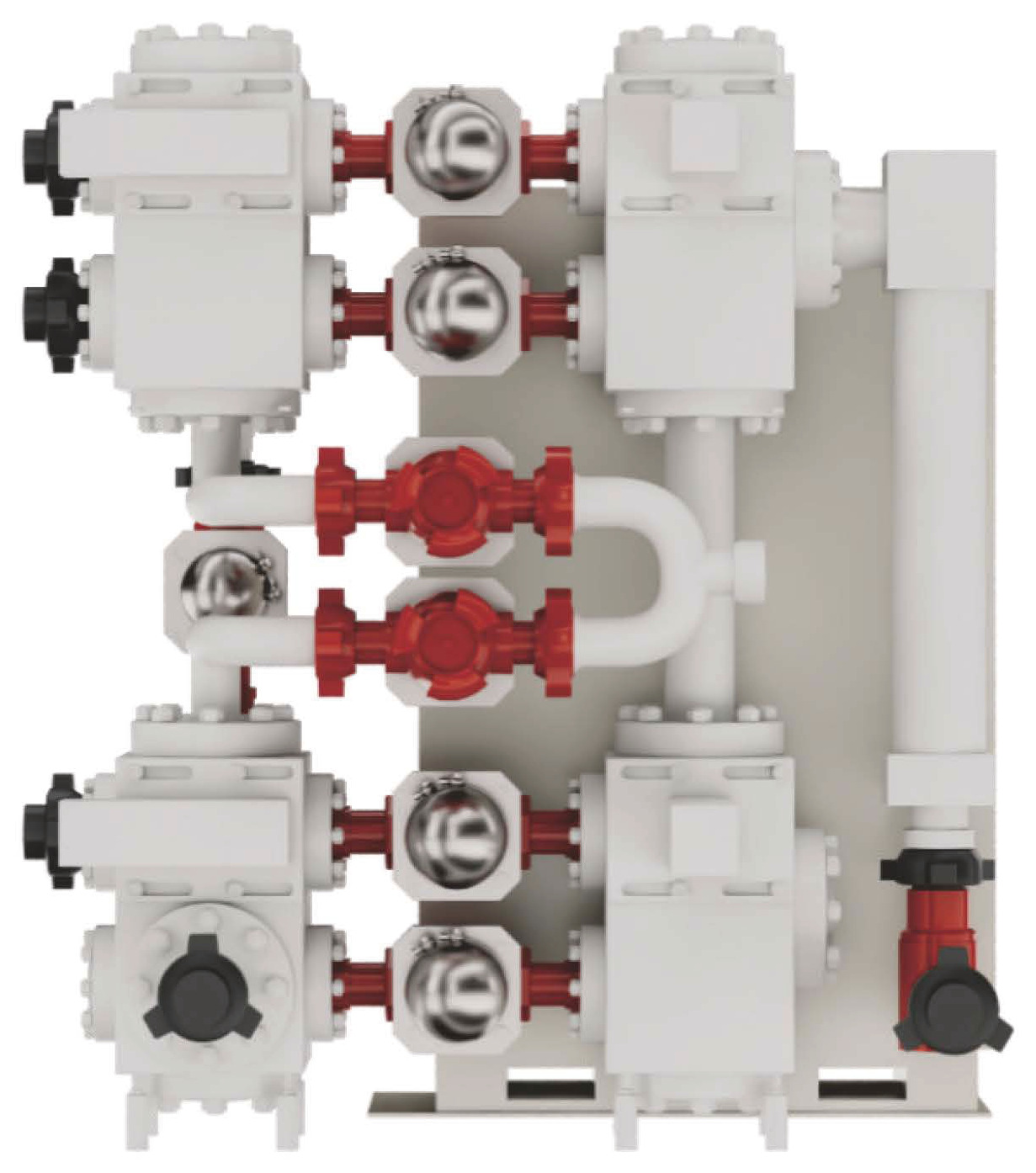
The only domestically developed valve-type continuous circulation drilling system in China. One of the few providers globally to offer HPV + PLC + Manifold intelligent control for valve-type CCS systems.国内唯一自主研发的阀式连续循环钻井系统。全球少数几家掌握 HPV + PLC + Manifold 智能控制阀式连续循环系统的提供商之一。
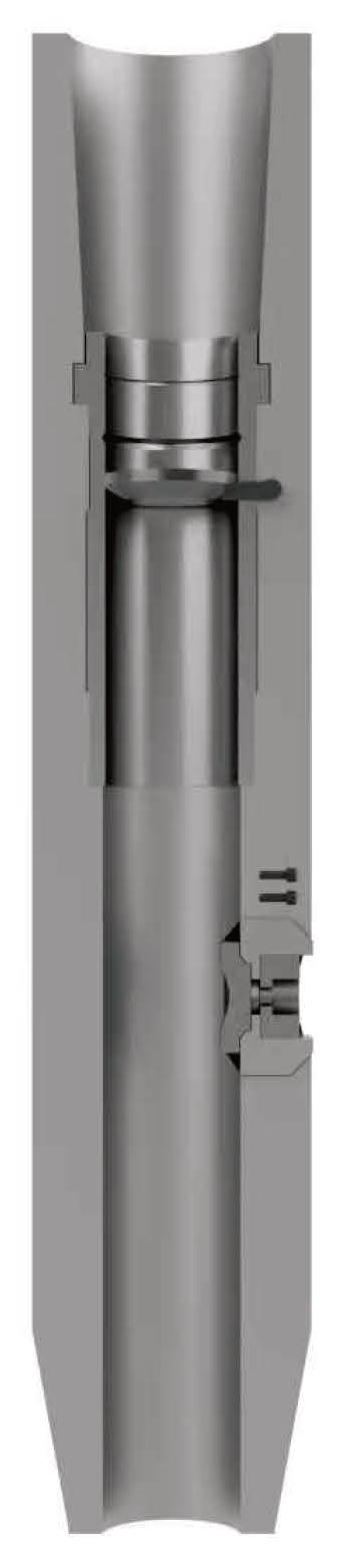
Anti-Drop Valve Plate Design阀板防脱安全设计
Failure-safe valve plate design — if the plate detaches, it falls into the circulation sub interior rather than into the wellbore, eliminating downhole fishing risk.失效安全阀板设计 — 阀板若脱落,落入循环短节内部而非井筒,杜绝井下打捞风险。
Eliminates ECD Fluctuations消除 ECD 跳变
Continuous mud circulation through connection make-up keeps ECD steady — preventing differential sticking, lost circulation, and formation damage in narrow drilling windows.接立柱过程中持续循环维持 ECD 稳定 — 防止差压卡钻、漏失和窄密度窗口井段的储层伤害。
Proven ROP & Cost Benefits验证的提速与降本效益
Across field applications, FECCS has delivered an average 18% acceleration in drilling rate of penetration and around 12% reduction in per-well cost — directly improving project economics.在现场应用中,FECCS 平均提速约 18%,单井降本约 12% — 直接改善项目经济性。
FECCS isn't only a piece of hardware — it rests on a complete, quantitative model of equivalent circulating density. The model is built on standard well-hydraulics theory, and it has been checked against real bottom-hole measurements. The two agree to within 1%. FECCS 不只是一台设备——它背后是一套完整、可量化的当量循环密度(ECD)模型。该模型建立在标准钻井水力学理论之上,并已用真实井底实测数据校核,二者吻合度优于 1%。
Flow-behaviour index and consistency are derived from Fann viscometer readings, exactly as specified in API RP 13D — capturing how the mud thins under shear in the annulus.流性指数与稠度系数由范氏粘度计读数按 API RP 13D 推导,精确刻画泥浆在环空剪切下的剪切稀化行为。
Drilled cuttings raise the effective density of the annular fluid. Transport efficiency and a volumetric balance give the in-situ concentration and the true circulating density.钻屑提高环空流体的有效密度。由携岩效率与体积平衡求得井内岩屑浓度与真实循环密度。
Flow regime is determined from the critical velocity, then the laminar or turbulent annular friction loss is integrated section by section — collar and pipe — to the bit.由临界流速判定流态,再分段(钻铤、钻杆)积分层流或紊流环空摩擦压耗至钻头。
A 12¼″ hole at 3,750 m, 60 L/s, oil-based mud. The model reproduces the measured circulating density almost exactly — the small offset is the lumped bottom-hole assembly, and it is conservative. 12¼″ 井眼、3,750 m、排量 60 L/s、油基泥浆。模型几乎精确复现实测循环密度——微小偏差源于钻具组合的合并简化,且偏保守。
After a 5–10 min connection, mud gel structure sets. Restarting the pump must break that gel — a pressure surge of ΔP = 4τ0H/(Dh−Dp). At 5 min the bottom-hole ECD jumps +0.8 ppg (3.71 MPa); at 10 min +1.0 ppg (4.45 MPa) — enough to fracture the formation and lose returns in a tight window. 停泵接单根 5–10 分钟后,泥浆静胶凝结构形成。再开泵须先破胶,产生激动压力 ΔP = 4τ0H/(Dh−Dp)。停泵 5 分钟井底 ECD 突增 +0.8 ppg(3.71 MPa),10 分钟 +1.0 ppg(4.45 MPa)——在窄窗口足以压裂地层、井漏失返。
By circulating continuously through every connection, FECCS never lets the gel set — so there is no break-gel surge at all. The bottom-hole ECD holds steady inside the window. This is the physics behind the field result: ECD fluctuation cut from ~17–21% to under 5%. FECCS 在每次接单根全程持续循环,泥浆从不结胶——因此根本不存在破胶激动。井底 ECD 稳稳保持在窗口内。这正是现场结果的物理本质:ECD 波动从约 17–21% 降到 5% 以下。
Enter geometry, mud rheology and flow rate — get ECD, flow regime, cuttings loading and the connection-surge risk, computed with the same validated model.输入井身结构、泥浆流变与排量,即得 ECD、流态、岩屑加载与接单根激动风险——由上述同一套验证过的模型计算。
Enping 21-X field, Hailong 9 platform — China's deepest offshore well, setting national records for both depth and horizontal reach (HD/TVD 4.43). 12-1/4″ section drilled 4,594–8,131m + 8-1/2″ section 8,131–9,508m. 164 XT57 circulation subs deployed; single-run distance 1,744m — record-setting. ECD held steady at 1.34–1.45 sg through three fault crossings; connection time reduced to 8–9 min. 恩平 21-X 油田,招商海龙九平台 — 中国海上第一深井,创井深与水平位移双项全国纪录(水垂比 4.43)。12-1/4″ 井段钻进 4,594–8,131m + 8-1/2″ 井段 8,131–9,508m。投运 XT57 循环短节 164 个;单趟钻进 1,744m — 创纪录。穿越三条断层段 ECD 稳定在 1.34–1.45 sg;接立柱时间提效至 8–9 分钟。
July–August 2021. First FECCS deployment in the Bohai Basin. 8-1/2″ hole section 3,906–5,001m (length 1,095m). Cuttings concentration reduced from 3.8% to 0.5%, delivering 88% cleaning efficiency and stable hole conditions through highly faulted sections. 2021年7-8月。渤海盆地首次部署 FECCS。8-1/2″ 井眼 3,906–5,001m(段长 1,095m)。岩屑浓度由 3.8% 降至 0.5%,净化效率达 88%,复杂断裂带井段井况保持稳定。
Panyu Oilfield's hardest ERD well (7,646 m MD, HD/TVD 2.76, full-section oil-based mud, a fault collapsing the window to 1.20–1.32 g/cm³). Continuous-circulation-valve drilling over the φ215.9 mm section held ECD within 2.3% and capped torque fluctuation at 2.86 kN·m — versus an offset well, ROP rose 2.5× and the φ177.8 mm liner ran straight to bottom, eliminating a 41-hour wiper trip. 番禺油田难度最高的大位移井(井深 7,646m、水垂比 2.76、全井段油基钻井液、断层使密度窗口收窄至 1.20–1.32 g/cm³)。连续循环阀钻井应用于 φ215.9mm 井段,ECD 波动控制在 2.3% 以内、扭矩波动仅 2.86 kN·m — 对比邻井机械钻速提升 2.5 倍,φ177.8mm 尾管直接下到底、省去一趟 41 小时通井。
Peer-reviewed. Documented in China Offshore Oil and Gas (2025) and the Journal of Southwest Petroleum University (2018). 同行评审佐证。相关应用发表于《中国海上油气》(2025)与《西南石油大学学报》(2018)。
Read the full case studies →查看完整案例 → Technical white paper →技术白皮书 →
Key Facts at a Glance关键事实速览 · Updated June 2026
| System系统 | FECCS continuous circulation, 5th gen |
| Control控制 | One-key flow-path + PLC |
| Pressure rating压力额定 | 7,500 psi |
| ERD case measured depth大位移案例井深 | 9,508 m |
| ECD fluctuation reduced toECD 波动降至 | under 5% (from ~17–21%) |
| Back-reaming improvement倒划眼提升 | ~71% |