FIELD CASE STUDIES现场案例

Proven where drilling gets hardest 在最难的井里,验证实力

FEODE's FECCS continuous circulation system, in two of China's most demanding extended-reach wells — results documented in peer-reviewed petroleum journals. 远东 FECCS 连续循环系统,在中国两口最具挑战的大位移井中的实战结果——经同行评审期刊公开记录。

Continuous circulation keeps the drilling fluid moving — and the equivalent circulating density (ECD) stable — through every pipe connection. On long open-hole, narrow-pressure-window extended-reach wells, that stability is the difference between a well that can be drilled and one that cannot. Below are two field cases, each independently documented in a peer-reviewed journal. 连续循环让钻井液在每一次接单根时都不停流动、当量循环密度(ECD)保持稳定。对于裸眼段长、压力窗口窄的大位移井,这种稳定往往就是"钻得成"与"钻不成"的分界。以下两个现场案例,均经同行评审期刊独立记录。

9,508 m
Measured depth — China's deepest offshore well测深 — 中国海上第一深井
<5 %
ECD fluctuation held, down from 17.6-21%ECD 波动控制(由 17.6-21% 降至)
2.5 ×
ROP vs. offset well, narrow-window section窄窗口井段机械钻速 vs 邻井
FLAGSHIP CASE · ULTRA-EXTENDED-REACH旗舰案例 · 超大位移井

EP21-4-A1H — China's deepest offshore well, 9,508 mEP21-4-A1H — 中国海上第一深井,9,508 米

The challenge挑战

Drilled in 2024 in the eastern South China Sea, EP21-4-A1H reaches a measured depth of 9,508 m with roughly 8,150 m of horizontal displacement — a horizontal-to-vertical ratio of 4.43. Across thousands of metres of open hole, the safe margin between pore pressure and fracture pressure is thin. Every conventional pipe connection stops circulation, lets ECD swing, and risks losses, pack-off or a stuck string. At this reach, repeated swings are simply not survivable. EP21-4-A1H 于 2024 年钻于南海东部,测深 9,508 米、水平位移约 8,150 米,水垂比高达 4.43。在数千米裸眼段中,孔隙压力与破裂压力之间的安全余量极窄。常规接单根会中断循环、引起 ECD 大幅波动,带来漏失、憋堵或卡钻风险。在如此井深位移下,反复波动是无法承受的。

FEODE's contribution远东的作用

FEODE's FECCS continuous circulation system was run across the 4,594-9,508 m interval — about 68.5% of the open-hole section — keeping the mud circulating without interruption through every connection. ECD was held steady, hole cleaning stayed effective at high rate, and the string kept moving where stalls would have been fatal. 远东 FECCS 连续循环系统应用于 4,594-9,508 米井段(约占裸眼段 68.5%),在每一次接单根时保持钻井液不间断循环。ECD 稳定、高排量下井眼清洁持续有效,钻具在最易卡阻的井段保持活动。

DUAL NATIONAL RECORD — DEPTH & DISPLACEMENT双项全国纪录 — 井深与位移
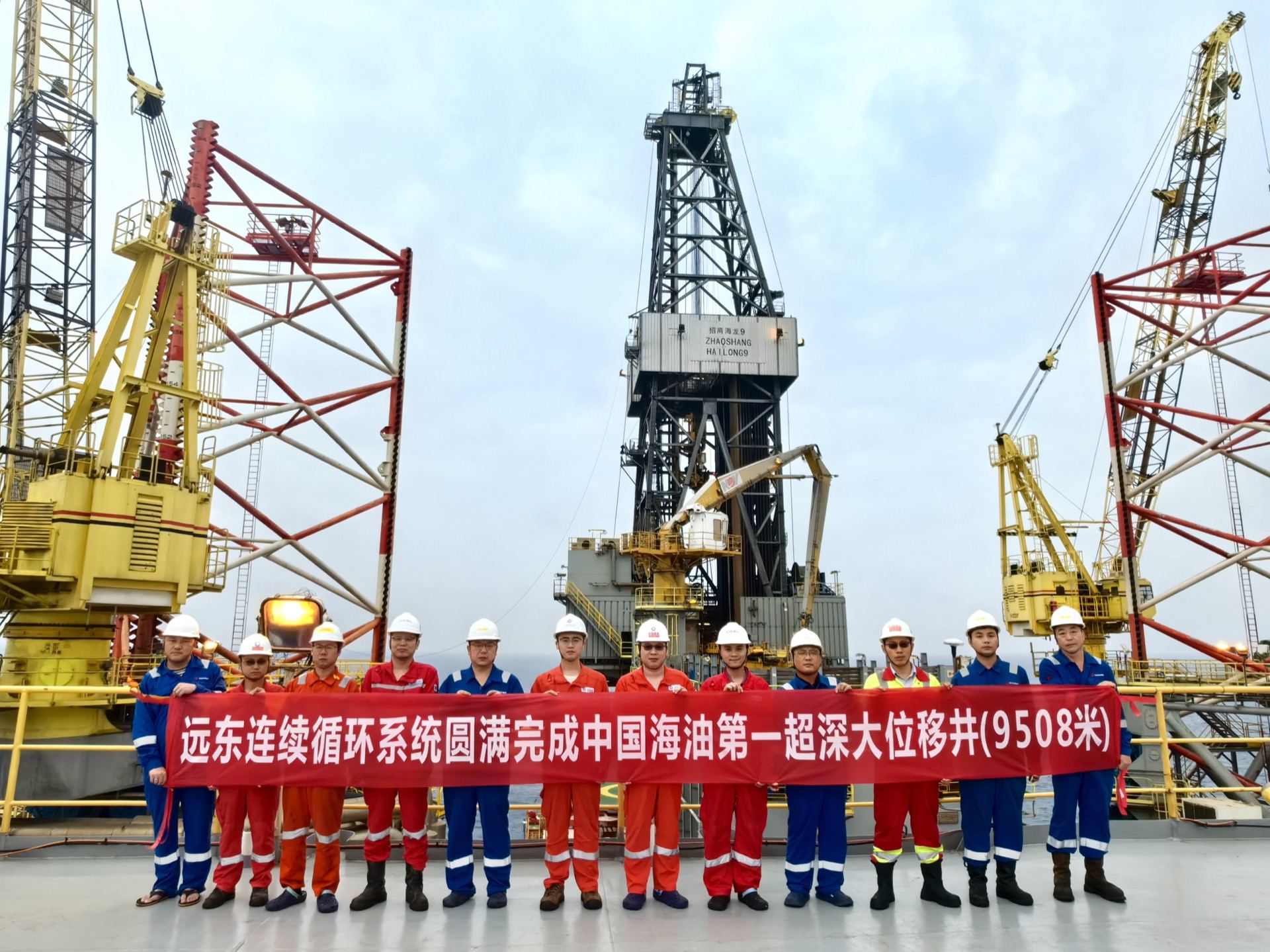
Peer-reviewed:同行评审: China Offshore Oil and Gas, Vol. 37, No. 4 (Aug 2025). DOI 10.11935/j.issn.1673-1506.2025.04.012
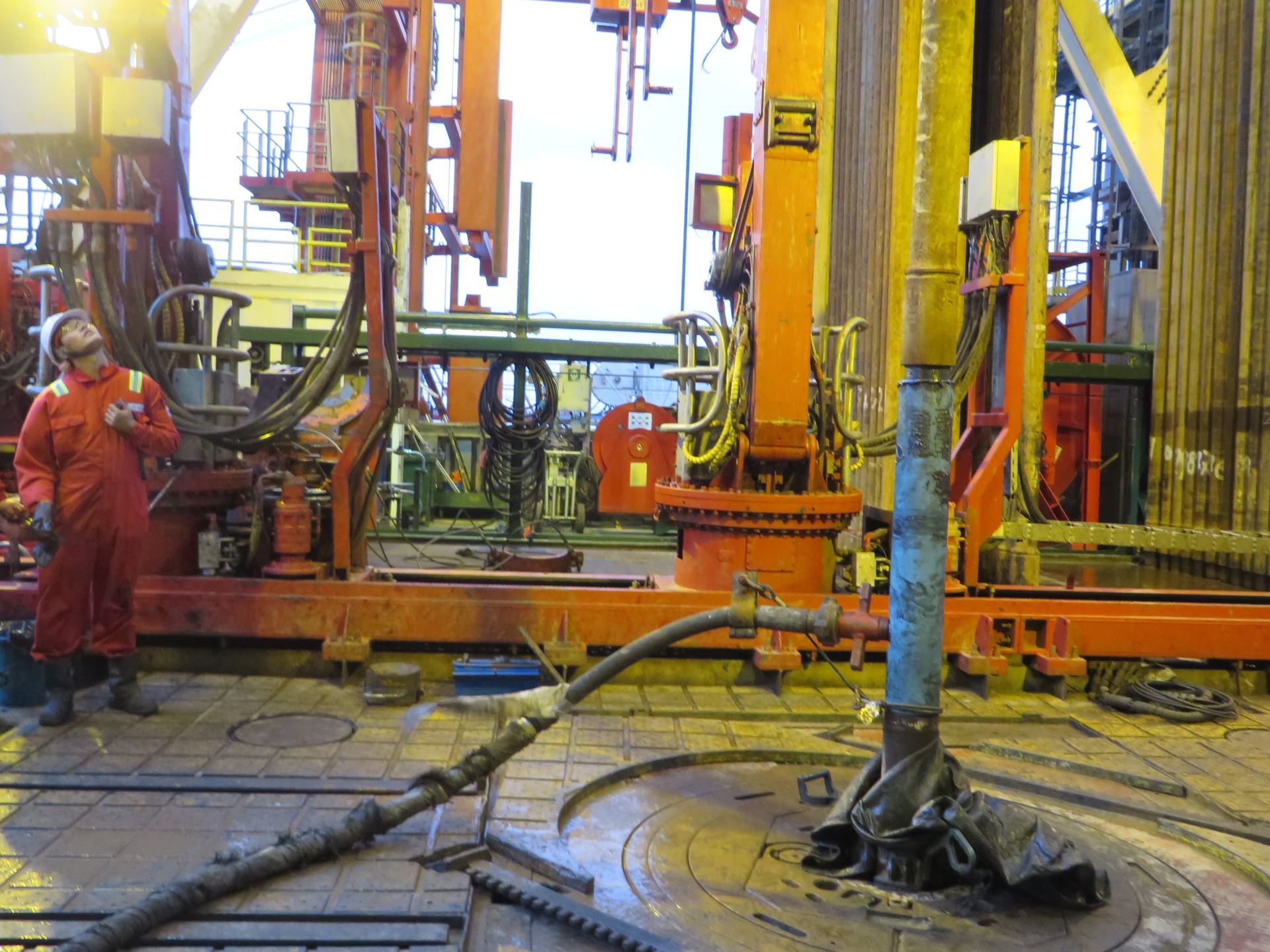
FECCS continuous circulation system on the rig floor
<5%
ECD fluctuation (from 17.6-21%)ECD 波动(由 17.6-21% 降至)
+71%
Back-reaming ROP, 26.82 → 45.86 m/h倒划眼钻速 26.82 → 45.86 m/h
1,744 m
Single continuous-circulation interval单趟连续循环进尺
0
Losses, hole collapse or stuck pipe漏失、垮塌或卡钻
FLAGSHIP CASE · NARROW DRILLING-FLUID WINDOW旗舰案例 · 窄密度窗口

PY10-5-A1H — Panyu's most challenging extended-reach wellPY10-5-A1H — 番禺最难大位移井

The challenge挑战

PY10-5-A1H, in the eastern South China Sea, reaches 7,646 m measured depth at a horizontal-to-vertical ratio of 2.76. A fault at 6,840 m narrowed the safe drilling-fluid density window from 1.20-1.81 to just 1.20-1.32 g/cm³, and the well was drilled with oil-based mud throughout. With so little margin, the ECD spikes caused by stopping and restarting the pumps at each connection were enough to fracture the formation or pack off the hole. PY10-5-A1H 位于南海东部,测深 7,646 米、水垂比 2.76。6,840 米处一条断层将安全钻井液密度窗口由 1.20-1.81 收窄至仅 1.20-1.32 g/cm³,全井采用油基钻井液。余量如此之窄,接单根时停泵、开泵造成的 ECD 冲击足以压裂地层或憋堵井眼。

FEODE's contribution远东的作用

FEODE's continuous circulation system was applied in the φ215.9 mm section from 6,122 to 7,148 m. Holding circulation through every connection kept ECD inside the narrow window and the hole clean — so the φ177.8 mm liner ran to bottom in one pass, with no wiper trip required. 远东连续循环系统应用于 φ215.9 mm 井段 6,122-7,148 米。接单根全程保持循环,使 ECD 始终处于窄窗口内、井眼保持清洁——φ177.8 mm 尾管一次直下到底,无需通井。

Peer-reviewed:同行评审: Journal of Southwest Petroleum University (Science & Technology Edition), Vol. 40, No. 4 (Aug 2018). DOI 10.11885/j.issn.1674-5086.2017.01.03.01
FEODE continuous circulation operation
19.30 m/h
ROP vs. 7.66 m/h offset well (2.5×)机械钻速 vs 邻井 7.66 m/h(2.5×)
<2.3%
ECD variation through the section井段 ECD 变化
2.86
Connection torque swing vs. 7.40 (kN·m)接单根扭矩波动 vs 7.40(kN·m)
41 h
Rig time saved — liner to bottom, zero wiper trip节省钻机时间 — 尾管直下、零通井

Stability is the whole game稳定,就是全部

01

Uninterrupted circulation removes the ECD spikes that conventional connections create — keeping bottomhole pressure inside a thin pore-to-fracture window.不间断循环消除了常规接单根带来的 ECD 冲击,使井底压力稳定处于孔隙—破裂的窄窗口内。

02

Continuous flow keeps cuttings moving on long open-hole sections, so the hole stays clean and the string keeps turning where stalls would mean stuck pipe.持续流动使长裸眼段岩屑不断运移,井眼保持清洁、钻具持续旋转,避免在易卡井段停滞卡钻。

03

The result is fewer trouble events, higher effective ROP, and casing or liner run to bottom in a single pass — measurable rig-time savings on the hardest wells.最终带来更少的井下复杂、更高的有效钻速、套管/尾管一次到底——在最难的井上换来可量化的钻机时间节省。

The engineering behind it — the API RP 13D ECD model FEODE uses, field-validated to within 0.8% — is detailed on our continuous circulation page. 其背后的工程原理——远东采用、并经现场实测互证至 0.8% 误差的 API RP 13D 当量循环密度模型——详见连续循环系统介绍页。 Continuous Circulation System →连续循环系统介绍 →

Have a well others call too hard? 有一口别人说"太难"的井?

That is the kind of well we were built for. Let's talk through the ECD window and your circulation strategy. 那正是远东最擅长的井。我们可以一起分析 ECD 窗口与连续循环方案。